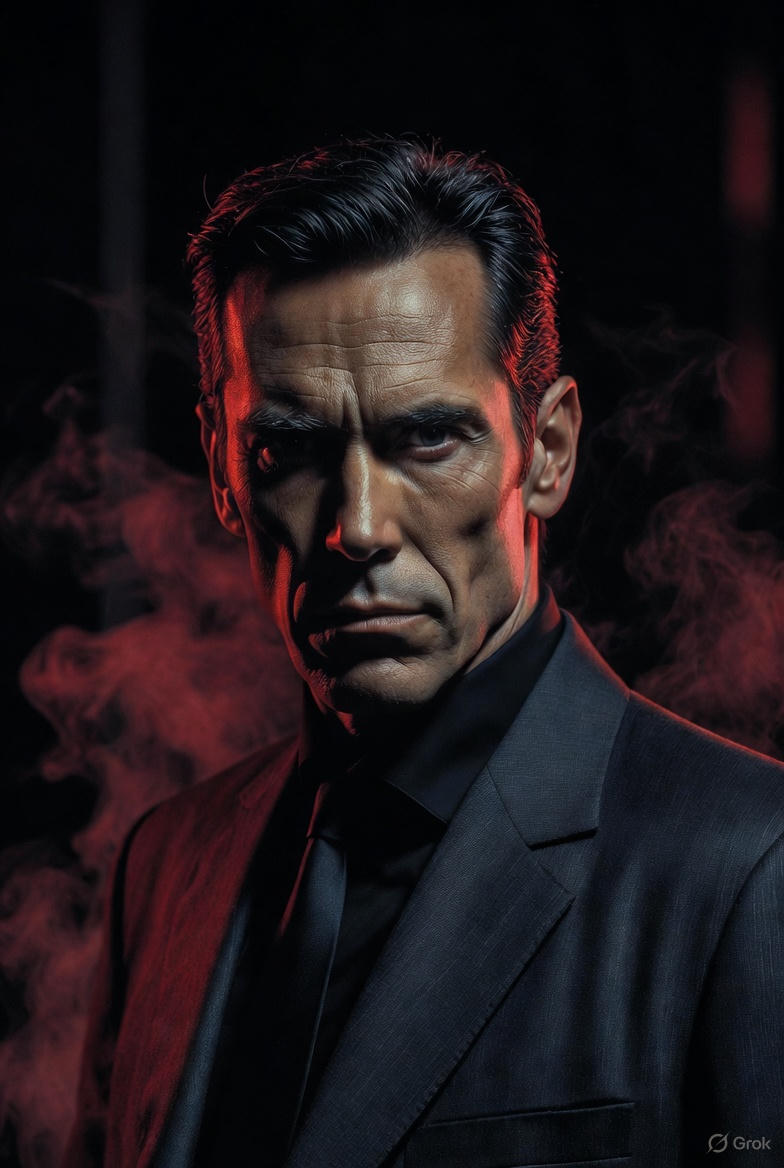
Howard Payne
Speed (1994)
Flaw Type: PragmatismThe Single Flaw
"His flaw was his need for total control — and his refusal to walk away without the money."
Full Analysis
Howard Payne, a disgruntled former Atlanta PD bomb expert, embodied a chilling form of **pragmatism** fueled by a deep-seated grievance against the system that denied him his pension. His entire scheme, from the elevator bomb to the finale on the subway, was meticulously engineered not out of chaos, but out of a precise, technical need for financial compensation he felt he was owed.
His flaw wasn't an inherent desire for destruction, but an obsessive commitment to a plan that required **total control** and zero deviation. He was a master clock-maker who forgot that living humans—especially heroes—do not follow predictable timetables.
The Illusion of Total Control
Payne’s genius was his technical control. He designed the bomb mechanisms, timed the drops, monitored the bus via police scanners, and manipulated the heroes (Jack Traven and Harry Temple) like pieces on a chessboard. He successfully controlled the elevator, the bus's speed, the media circus, and the exchange location.
However, the moment the unpredictable element of human nature—Jack Traven’s desperate resourcefulness and Annie Porter's courage—entered the equation, Payne’s plan began to fray. A true pragmatist would have adjusted the threat or abandoned the scheme when the bus jumped the gap, but Payne’s attachment to his intricate design blinded him. He simply could not accept that the variables he had so carefully contained were starting to escape.
The Fatal Greed: Refusing the Exit
Payne planned every step of his escape, including the final money drop on the subway. He successfully obtained the ransom, giving him everything he initially wanted. At this point, the pragmatic thing to do would have been to walk away and disappear with the millions.
But his flaw went deeper than his need for the money; it was his **pride in his control**. He couldn't resist setting one final, unnecessary trap for Jack—a secondary bomb on the rigged subway car. This act of hubris, stemming from his need to prove he was smarter than the heroes, forced him back into the confrontation. He turned a perfect escape into a final, deadly face-off.
The Miscalculation of the Extra Bomb
Payne’s final, fatal miscalculation was focusing his attention too narrowly on Jack Traven while being physically engaged. He had rigged the subway car, knowing the bus situation was over, but his attention was solely on eliminating Jack.
The one element of his plan that was not perfectly accounted for was the **explosive vest** he wore as a contingency. In a moment of high tension and physical struggle with Jack, he accidentally triggered the dead man's switch on his own vest—a mechanism he himself designed for protection, but which ultimately led to his spectacular, unintended demise. His own carefully laid safety net became his downfall, proving that even a master of control cannot control every detail, especially his own emotional reactions to failure.
The Final Irony:
"Howard Payne died not because his bombs were diffused, but because his **greed for control** forced him to stay on the stage long after his brilliant, cynical performance should have ended."